
OFF THE RECORD #129
The World’s Worst Jockey? Meet Les Boots
Richard Fourie’s daring, race-winning ride aboard Note To Self in the 2026 Hollywoodbets Durban July reverberated beyond Hollywoodbets Greyville. His triumph was widely hailed as a masterclass, while Google AI Overviews described him as a jockey with ‘incredible career statistics, widely celebrated for an elite, relentless work ethic that has redefined modern horseracing standards in South Africa.’
While James McDonald is recognised by many as the world’s leading jockey, searches for today’s elite riders regularly place Fourie among the top 10, alongside stars such as Ryan Moore, Irad Ortiz, jr. and Zac Purton.
Search the internet for the greatest jockeys of all time and the same legendary names surface repeatedly: Sir Gordon Richards, Lester Piggott, Russell Baze, Laffit Pincay Jr, Steve Cauthen and Sir A.P. McCoy.
This raises an altogether different question. If racing history has produced universally acclaimed greats, surely it must also have produced an equal, opposite list?
However, there are no official rankings for the world’s least successful jockeys. Professional racing databases are designed to celebrate major achievements, and failures are not listed.
The digital verdict is remarkably unanimous. When you search for the world’s worst-ever jockey on any internet engine, a single name appears almost every time: Les Boots!
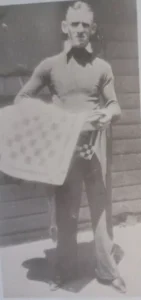
It sounds more like a racing nickname than a real name. It even has a vaguely French flavour, resembling les bottes (‘the boots’).
But there was no pun intended. Les Boots really was this jockey’s name, and he became famous for all the wrong reasons. He never rode a winner, never finished in the placings and reportedly never stayed on a horse beyond halfway in any of his races. His career record bordered on the unbelievable: 39 rides… and 40 falls.
The exact date of Les Boots’ birth has been lost to history. What is known is that he was born in England around 1907. Like countless young men of his generation, Les dreamt of becoming a jockey. That ambition eventually took him to Australia, where he served his apprenticeship under trainer Harry Butler, riding work and cleaning out stables while looking for race-riding success.
Butler was convinced that the English-born youngster would feel right at home over the famous Cheltenham fences, and sent him back to England to partner a horse named Umbalir in a contest at the famous track. Umbalir was considered a ‘safe’ jumper.
Les’ homecoming lasted all of one hurdle. Horse and jockey parted company at the first obstacle, leaving the young rider in hospital. He partnered Umbalir twice more after that and each time the result was identical – another fall and another hospital visit.
Three rides, three falls and three hospital visits. It was an early indication that fate had a rather uncanny script in mind for Les Boots. While he rode six or seven horses in work every morning, six times a week, he was simply useless in a race.
Remarkably, Les bore his misfortunes with good humour and laughed at himself. Reflecting on his career years later, he quipped: “When it came to the real thing I couldn’t stay on. Every time I rode in races I fell off, or the horse did or we both did.
“I once fell off at the first fence breaking my leg, then fell out of the ambulance on the way back to the casualty room. Then, while they were carrying me across the lawn, I fell off the stretcher.”
Les estimated that he’d spent 12 of his 18 years as a jockey in hospital and liked to joke that Adelaide Hospital kept a bed on standby whenever his name appeared in the racecard.
By then, hospital visits had become routine. Whenever Les left for the races, his wife packed not only a lunch, but also a pair of pyjamas and a few overnight necessities, just in case.
“It got a bit much when the starter mounted his stand and just before releasing the field he’d call out, ‘We’ll come around the hospital through the week, Les, and bring you some fruit’!
Les explained his riding statistics: “I had 39 rides over the jumps and fell off 40 times. I once fell off, caught the horse and remounted, but fell off at the next fence to make up the 40 falls. I broke just about every bone in my body, arms, legs, wrists, collar-bones, shoulders, the lot.
“There was a point when the South Australian Jockey Club was going to bar me from riding because I was putting too big a strain on their Workers’ Compensation Fund.”
For most riders those stories would have sounded unbelievable. For Les, they were simply everyday life.
“Bookmakers used to price up 100/1 about my mounts, no matter how good their form read. Never once did I complete the course over the jumps, in fact I never got past the winning post the first time around.”
Les’ most frightening experience came on a foggy day at Victoria Park Racecourse. Recalling the incident years later, he said: “I fell off at the first hurdle and was hurt and winded. I couldn’t get up and was lying on the track waiting for the ambulance when, through the fog, I heard a voice say, ‘I think we’ll have to shoot him!’
“That woke me from my daze. I got up and beat the ambulance back to the jockeys’ room, where they sedated me.”
Only later did Les discover that the grim verdict had been directed at his mount rather than himself. For once, he’d managed to get off the track on his own steam.
The legend of Les Boots became part of Australian racing folklore.
Melbourne Cup-winning jockey Johnny Letts, one of the country’s leading riders in the 1970s, recalled one story told in the jockeys’ room: “When Les was riding it made for a long day for all the other jockeys. Everyone knew he was going down, and so did Les. The ambulance would come and cart him away, but racing couldn’t resume until it returned from the hospital. The entire card was delayed every time Les had a mount.”
Despite a record that no jockey would ever wish to emulate, Les was well loved. His self-deprecating humour, infectious personality and endless supply of anecdotes made him a favourite on Australian radio, where he was always good for a chuckle.
One of his best-known stories concerned an ambition he never fulfilled. He said: “I gave the game away after a bad fall off a horse called Parla. I broke my neck and spent two years in hospital. I never did realise my life’s ambition to ride in the English Grand National at Aintree. My wife cancelled my passport. She reckoned I’d be the first jockey to drown at the water jump.”
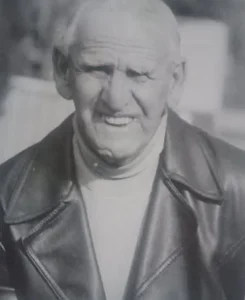
Les Boots lived to the age of 80 and died in 1987, still able to smile at a career that had brought him fame for all the wrong reasons. While history has labelled him the world’s least successful jockey, he nevertheless left behind an enduring legacy.
That, perhaps more than any winner he never rode, is why Les Boots remains an improbable legend – but a legend all the same.
Sources: