OFF THE RECORD #145
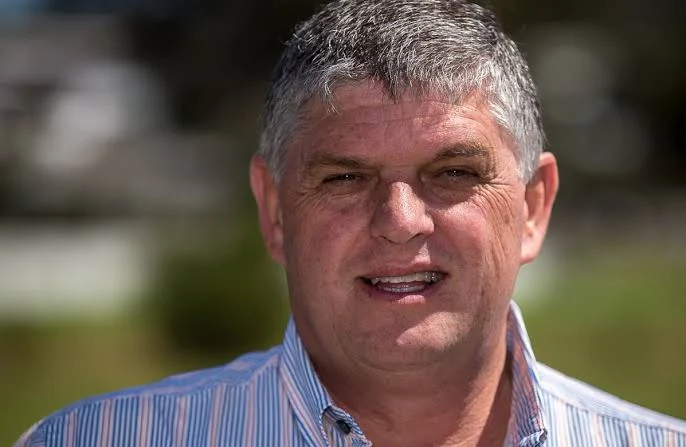
Carl de Vos: The Making of a Master Stud Manager
Part 1:
Varsfontein Stud has enjoyed an extraordinary year, its finest since being founded by Anthony Kalmanson in 1974. The formidable Paarl establishment finished a close second in the 2025-2026 National Breeders’ Championship with record stake earnings, enjoyed a hugely successful season on the track, and produced sensational results in the auction ring. (-Statistics at the end of this article). Then, to crown it all, came a surprise visit by Anne, Princess Royal, in early November.
It has been a remarkable year by any measure, but perhaps also a fitting culmination of the work of stud manager Carl de Vos and his team over the past 38 years. Through their dedication and commitment, Varsfontein has grown into one of the country’s powerhouse breeding operations, with a reputation and foundation firmly established for many seasons to come. Now, as Carl prepares to retire, it is an opportune moment to reflect on the man and the contribution he has made to one of South Africa’s most successful stud farms.
Carl’s career has been shaped by a rich and varied mix of experiences, relationships and influences. Looking back at his life, however, three figures stand out as having played particularly significant roles in his development: his late father, horse breeder Pierre de Vos; veterinarian Dr. Frank Freeman; and the late Terrance Millard. Each, in his own way, left an indelible mark on Carl, helping to shape the horseman, the stud manager and the man he would become.
Of course, the Kalmanson family has been central to that journey. Their faith in Carl, and the opportunity to grow alongside Varsfontein over nearly four decades, provided the setting in which those influences and his own abilities could flourish.
A tale from Carl’s childhood is always worth recounting, particularly as it offers an early glimpse of his lifelong fascination with horses – and perhaps a hint of the entrepreneurial instinct that would serve him well in later life.
Growing up in rural Beaufort West, Carl was just seven when he came across a beautiful grey mare pulling a donkey cart. He struck up a conversation with the owner, only to discover that the man had an urgent need for a radiator for his vehicle. Young Carl saw an opportunity and promptly negotiated a deal. On the family farm stood an out-of-service Jeep, from which he proposed removing the radiator in exchange for the mare.
His father, who had been taking a nap at the time, was understandably taken aback when he awoke to discover the deal his son had struck. Nevertheless, after taking it all in, he gave his approval – and Carl had his first horse!
Carl named the mare ‘Radiator’, and she surprised everyone by developing into a jumper of considerable ability. She also helped him hone his riding skills, eventually earning him provincial colours in Gymkhana.
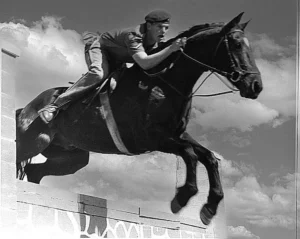
After matriculating from Paarl Gimnasium in 1979, Carl completed his military training at the SADF’s Equestrian Centre in Potchefstroom. He excelled at both marksmanship and riding, completed the unit’s select ‘M’ course in dressage and showjumping, and was chosen as a junior member of a nationally competing team that included several riders who would go on to become illustrious figures in the sport: Barry Taylor, Lachlan Maclachlan and Paul Garlicki.
When his military service ended in 1980, Carl joined veterinarian Dr Frank Freeman at Boland Stud in Ceres. Freeman became an early mentor, guiding him in various aspects of horsemanship. He also recommended Carl for the Yearling Preparation Course held at the Southey family’s The Valley Stud.
The course attracted international participants, among them Ben Sangster and Victor Connolly. Carl’s command of Afrikaans proved particularly useful, as he was able to assist the visitors with communication.
Freeman was instrumental in securing Carl a position at Mill Ridge Farm in Lexington, Kentucky, where he worked under Freeman’s veterinary colleague, Dr John Chandler.
Carl recalled: “John Koster (later of Klawervlei Stud) and Duncan Barry (later of Riverton Stud) were around at the time and also keen to gain overseas experience. They explored opportunities in Ireland, while I landed in the United States, where Gavin Schafer (later of Mauritzfontein Stud) and Paul Shannahan (later of Coolmore) were also cutting their teeth.”
Carl moved to Gainesway Farm in Kentucky, where he worked for American Thoroughbred pioneer John Gaines. The legendary stud, situated on Paris Pike near Lexington, was acquired by South African mining magnate Graham Beck in 1989 and is today owned by his son, Antony.
Carl’s time at Gainesway was followed by a spell working with sale consigner John Gentry, before joining South African Ronnie Rosen at The Alchemy in Versailles, Kentucky. He completed his American sojourn working as a selector for Fasig-Tipton at Keeneland.
By the time Carl returned to South Africa in 1983, he had gained invaluable experience across several facets of the American thoroughbred industry, from stud management and horse preparation to bloodstock selection. But his education was far from complete. Over the next five years, he moved between a number of positions in South Africa, continuing to broaden his knowledge and deepen his understanding of the local breeding industry.
This was a period of further learning and professional development, but also some frustration. There was perhaps little indication that Carl was on the verge of settling into what would become a 38-year association with Varsfontein in 1988.
An opportunity arose with Mike Rattray, who was in the process of developing Lammerskraal. However, Carl’s hopes were dampened when he discovered that horse breeding would only feature in a later phase of Mr Rattray’s plans. The immediate priority was fruit farming, an area in which Carl had neither experience nor any particular inclination to become involved.
Frank Freeman came to Carl’s assistance once again, this time through his friend Hymie Maisel. Carl was appointed stud manager at Maisel’s Hyjo Stud in Philippi, a period he remembers fondly for the opportunity to meet and socialise with many of the industry’s leading racing personalities. At this time, he was introduced to Amanda Robins, who would later become his wife.
Amanda, in her own words, was a ‘horsey’ girl who moved in the circles of Cape racing’s prominent families. Among her friends were Suzanne Pfeiffer, Michele Rixon and Anthea Ovenstone, whose great-aunt, Edith, was a major patron of Peter Kannemeyer’s stable. Amanda and Anthea would often ride work for ‘PK’.
Described by Carl as “a highly intelligent individual who has been my rock of support for 40 years”, Amanda understood the racing industry and its many personalities, including some of the more difficult and complicated characters. She was an ideal match for the straight-talking young Afrikaner.
Soon after Carl and Amanda were married, Ronnie Rosen had returned to South Africa and purchased The Wedge Stud near Robertson. He renamed it The Alchemy, after his farm in the United States, and appointed Carl as stud manager. Carl played a significant role in the early development of The Alchemy (later taken over by George Kahan), where runners like champion sprinters Flobayou (Waterville Lake) and Shoe Shac (Shoe Danzig), as well as star miler Glamour Boy (Model Man), were among its first notable graduates.
Restless Carl, still looking for the perfect fit, received a call from Terrance Millard, who advised that Mick Goss was seeking a stud manager at up-and-coming Summerhill Stud in Mooi Rivier. “Mick offered a great package and I was considering a move to the old Natal Province, but Amanda felt it was too far away from our established network in the Western Cape, and we turned Mick’s offer down.”
Carl’s next possible move came through the partnership of high-flying businessmen Adrian Gardiner and Tony Ross, who had purchased Roodefontein, a 1,000-hectare farm near Plettenberg Bay, with the intention of establishing a stud.
“Roodefontein Stud was launched amid much fanfare and the proprietors flew us down there in their private jet to discuss their proposal,” Carl recalled. “They were turning this property into an American-style horse farm with beautiful barns and paddocks and manicured gardens, and we were truly tempted.”
At the time, Carl also travelled to Durban for the yearling sale at the old Newmarket showgrounds. He attended a race meeting that would change the course of his life.
“While sitting on the steps of the grandstand, I met a young lady who was also a lover of horses and racing. We got talking, chatted for quite a while and eventually said our goodbyes. She was Susan Kalmanson, who had recently completed her university studies. Neither of us could have imagined the journey we were about to embark on together.”
Terrance Millard, who had trained horses for the Kalmanson family and was close to Anthony Kalmanson, phoned soon after Carl’s visit to Durban. “You know that girl you met in Durban? They want to speak to you about joining Varsfontein Stud. This is a good opportunity for you,” he said.
Carl now faced a clear choice between two very different paths. On the one hand was the magnificent Plettenberg Bay Stud, which he likened to a sweet toffee apple dangling temptingly in front of him. On the other hand was a small, private and very much under-the-radar operation.
Faced with the difficult choice between the two options, Carl decided to call his father, Pierre, and explain the dilemma he was wrestling with.
“My dad listened to everything I had to say and then replied: ‘You know, Carl, you are the master of your own destiny. I can’t make decisions for you. But let me ask you this: if you start off as a young driver in a big, fancy new Mercedes-Benz, what would you buy next? Isn’t it better to start off with a Mini Minor and buy a bigger and better car when you’ve learnt to drive?’”
Part 2, next week:
Carl and the Kalmanson family build Varsfontein into a powerhouse – their stallions, strategies, ongoing investments, the pending change of guard, and the future.
Varsfontein statistics:
2025/26: Varsfontein Stud graduates produced 43 stakes horses over the 2025-26 season. The stud was the leading breeder by Stakes Winners and Stakes Wins with 17 stakes winners of 21 stakes races, earning a Varsfontein record R32,261,776 over the season.
The stud’s success at the highest level was delivered by producing 4 G1 winning graduates of 5 G1 races, and an additional 11 G1 placings throughout the season. G1 winning graduates included Double Grand Slam (2), Note To Self, Questioning and The Real Prince.
For the second year in a row, a Varsfontein Stud graduate has won the G1 Hollywoodbets Durban July. The 2026 Varsfontein Stud bred winner Note To Self (Futura) is also a half-brother to Viking Leader (Erik The Red), winner of the Listed Gatecrasher Stakes in June, and is from the celebrated Secret Pact family of Promisefrommyheart, Master Of My Fate, Malmoos and Erik The Red.
Other stand-out graduates include Alice B Toklas, Anotherdanceforme, Aquae Calidae, Atticus Finch, Double Grand Slam, Garrix, Gimme What I Want, Gladatorian, Golden Palm, Green Energy, Main Defender, Okavango, Questioning, Randolph Hearst, Regulation, Roccapina, Roland Garros, The Real Prince, etc. The most memorable of these being the 2026 G1 King’s Plate where Varsfontein’s graduates finished 1st (The Real Prince) and 2nd (Questioning) in this esteemed event.
The 5yo Champion mare Double Grand Slam won the 2026 G1 Majorca Stakes and the 2026 G1 Empress Club Stakes, making her a G1 winner in all 3 major racing provinces. She received the Equus Champion Older Female award in 2026.
The Alec Foster bred graduate Questioning won the G1 Gold Challenge and was 2nd in the G1 King’s Plate, and was the winner of 3 other graded races over the season – resulting in the Equus Award for Champion Miler 2026.
Record SA Sales results:
Varsfontein consigned their yearlings and two-year-olds to three Bloodstock SA Sales in 2026 – the Cape Yearling Sale, National Yearling Sale and August Two-Year-Old Sale – achieving an overall yield of R61,505-million – the highest sales figures in the stud’s history as well as the record annual turnover for a vendor.
(Thanks to Jeremy Nelson for research and assistance).